+8613706519013
 BHC Polymer Additives Co., Ltd / Shanghai Crystal Wells Chemical New Materials Co., Ltd.


After working with sulfur vulcanization systems for many years, I have learned one fundamental lesson: cure uniformity is not an accident—it is engineered. Among the many vulcanization accelerators available, MBTS (DM)-75 consistently stands out as a reliable tool for achieving stable, even, and predictable curing behavior, especially for newcomers to rubber formulation.
This article explains why MBTS (DM)-75 improves cure uniformity, not just in theory, but in real-world processing and production.
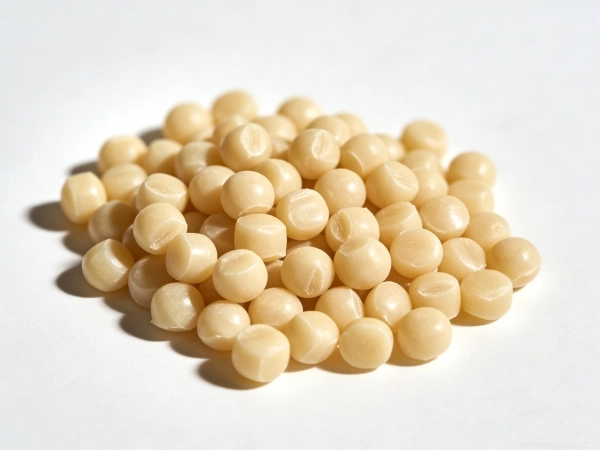
Chemical Structure of MBTS (DM)-75 and Its Role in Vulcanization
MBTS, chemically known as Dibenzothiazyl Disulfide, is a classic thiazole-based secondary accelerator widely used in sulfur curing systems. From a molecular standpoint, its disulfide bond structure is the key to its behavior.
Unlike fast primary accelerators, MBTS does not immediately release active sulfur species at low temperatures. Instead, it requires sufficient heat to break down into active intermediates, which then participate in crosslink formation. This characteristic makes MBTS inherently moderate in activity and stable in processing.
From my experience, this structural stability is precisely why MBTS is forgiving for beginners. It provides a wide safety margin during mixing, milling, and extrusion—stages where premature reactions can easily ruin a compound.
Delayed Action Mechanism and Controlled Cure Rate
One of the most important properties of MBTS (DM)-75 is its delayed action cure mechanism. In practical terms, this means:
• Longer scorch time
• Slower onset of vulcanization
• More controlled cure rate
For new compounders, fast accelerators often feel attractive because they shorten cure time. However, they also increase the risk of uneven curing, especially in thick or complex rubber products.
MBTS behaves differently. It allows heat to penetrate evenly throughout the rubber matrix before significant crosslinking begins. In my own plant trials, this delayed reaction consistently resulted in smoother cure curves and fewer surprises during molding.
This controlled cure behavior is the first major step toward true cure uniformity.
How MBTS (DM)-75 Promotes Even Crosslink Distribution
Cure uniformity is fundamentally about crosslink distribution, not just total crosslink density. MBTS (DM)-75 excels here.
Because MBTS releases its active species gradually, sulfur crosslinks form at a more even pace across the entire compound. This reduces the likelihood of:
• Over-cured surface layers
• Under-cured core sections
• Localized stress concentrations
In thick rubber products—such as industrial hoses, vibration isolators, and solid tires—I have repeatedly observed that MBTS-based systems produce more consistent hardness profiles and mechanical performance from surface to core.
Simply put, MBTS gives the rubber time to “breathe” before locking its molecular structure into place.
Comparison with Fast Accelerators: Why Uniformity Matters
Fast accelerators like CBS, TBBS, or TMTD certainly have their place, but they behave very differently from MBTS.
In my early years, I made the classic mistake of relying too heavily on fast accelerators. The result?
• Narrow processing windows
• Increased scrap rates
• Inconsistent product quality
Fast accelerators initiate crosslinking rapidly, which can be problematic when temperature gradients exist inside molds or presses. MBTS, by contrast, is often used alone or as a secondary accelerator to balance these effects.
For beginners, MBTS (DM)-75 is an excellent learning accelerator because it teaches good formulation discipline while delivering reliable cure uniformity without excessive risk.
Impact of Cure Uniformity on Final Rubber Performance
Uniform curing is not just a processing concern—it directly determines end-use performance.
In my experience, compounds cured with MBTS (DM)-75 typically demonstrate:
• More consistent tensile and tear strength
• Improved fatigue resistance
• Reduced internal stress and warpage
• Better long-term aging stability
When crosslinks are evenly distributed, rubber products behave more predictably under load, heat, and repeated deformation. This is especially critical in applications where durability and safety are non-negotiable.
For new formulators, mastering cure uniformity early—using a stable accelerator like MBTS—builds a strong foundation for more advanced compounding work later on.